Book details
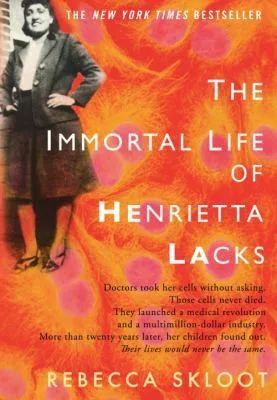
The Immortal Life of Henrietta Lacks
by Rebecca Skloot
2010 · Pan Macmillan
About the book
In 1951, doctors at Johns Hopkins Hospital took tissue samples from Henrietta Lacks, a Black woman with terminal cervical cancer, without her knowledge or consent. These cells, known as HeLa, became the first human cell line to survive and multiply indefinitely in a laboratory. While her biological material fueled major medical advances like the polio vaccine and gene mapping, her family remained in poverty and unaware of her global scientific legacy for decades. The narrative tracks the collision between institutional medical ethics and the Lacks family's struggle to understand their mother’s posthumous existence.
This book serves readers interested in the intersection of bioethics, racial inequality in medicine, and scientific history. It provides a detailed look at how historical medical practices prioritized research data over patient rights and informed consent. Readers gain a technical understanding of cell culture alongside a social history of the Jim Crow era’s impact on healthcare. You walk away with a clear perspective on the legal ownership of human biological materials and the human cost behind modern laboratory discoveries.
Details
- Published
- 2010
- Publisher
- Pan Macmillan
- ISBN
- 9781529014679
- Language
- EN