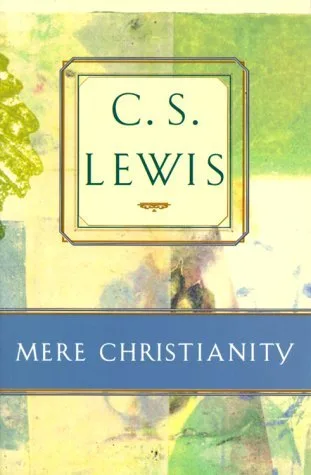
Book details
Mere Christianity
by C.S. Lewis
1952
About the book
C.S. Lewis bases his argument on the existence of a universal Moral Law, a standard of right and wrong that humans recognize but frequently violate. He moves from this shared human experience toward the necessity of a creator and then specifically to the Christian doctrine of the Trinity. The text details the theological mechanics of the Incarnation and the Atonement while categorizing traditional virtues such as temperance, fortitude, and justice. Lewis outlines the specific psychological differences between mere morality and the Christian concept of being remade into a new creature.
This book serves as a primer for those seeking a logical framework for faith rather than an emotional one. Readers use it to understand the intellectual scaffolding of the Apostles' Creed and the internal logic of Christian ethics. The text provides a vocabulary for discussing the relationship between free will and divine grace. A reader walks away with a structured defense of traditional orthodoxy and a clearer definition of how the Christian faith distinguishes itself from rival worldviews and pantheistic systems.
Details
- Published
- 1952
- Language
- EN